The same film
On AI, shared stories, and choosing hope over fear
On Saturday my partner and I went to see the new Spider-Man. I enjoyed it. Not only because of the film, but because of the moments where we looked at each other, both thinking of something we had been through together.
Then the credits started rolling. Hundreds of names, then more. And my mind wandered: how long before a few people could make a film like this with AI? And what would we lose if they did?
We used to watch the same thing
I remember when we were all talking about Lost after each weekend. A new episode came out once a week, so everybody was at the same point at the same time. You had a week to come up with theories, and on Monday there was always somebody to share them with.
That shared pace is gone. Streaming services drop a whole season at once, and everyone watches it when it suits them. By the time I've seen something, my friends are either far ahead or haven't started yet. Even the big hits, like Stranger Things or Squid Game, are discussed for a few weeks and then they die out.
And the talk itself got flatter. From what I've seen of the reactions to the new Cyberpunk season, it's mostly people saying they liked it, or they didn't. Not much deeper than that.
Next, we might not watch the same thing at all
Generated video is getting good fast. Short clips already look convincing. Keeping a character the same across two hours and a few thousand shots is still hard, but I don't think it will stay hard for long. Within a few years, a handful of people could make something that passes for a decent film.
This already holds for a lot of the text LLMs generate, of course. Most of it is read by one person, and some of it by nobody at all. Even this post was largely written with an LLM, though some of the lines are quite literally what I wrote as my answers.
It's an odd thought that more and more of what gets made is never really seen. It is produced, delivered to a single reader or viewer, and gone. No one else knows it existed.
What changes is not only the number of people, but how many perspectives go into it. A film like Spider-Man is a compromise. Writers, actors, a director, an editor who cuts the scene the director loved. That friction is often where the good parts come from. An AI film made by one person is closer to a novel: one vision, without anyone pushing back. That isn't worse by definition, but it is something else. With AI, the author becomes both one person with a prompt and everyone whose work went into the model.
And soon anyone can generate their own film, made just for them. But a film only you have seen is a film nobody can look at you about. There's nobody to discuss it with, and no shared memory to build on.
Books, too
It isn't only film. Think of books. A writer can spend years getting the words right, in the hope that many people will read them. The effort is part of the deal: the reader trusts that someone cared about every sentence.
Now anyone can be a writer. Type a prompt, get a chapter. But if everyone can be a writer, then in a sense nobody can be. When writing costs nothing, the word loses much of its meaning. I took that thought from A Better Paradise by Dan Houser, which I read, and it stuck with me. A book you can have written for you in a minute is hard to value, and harder to recommend. What do you say about it? That it exists?
Cyberpunk saw it coming
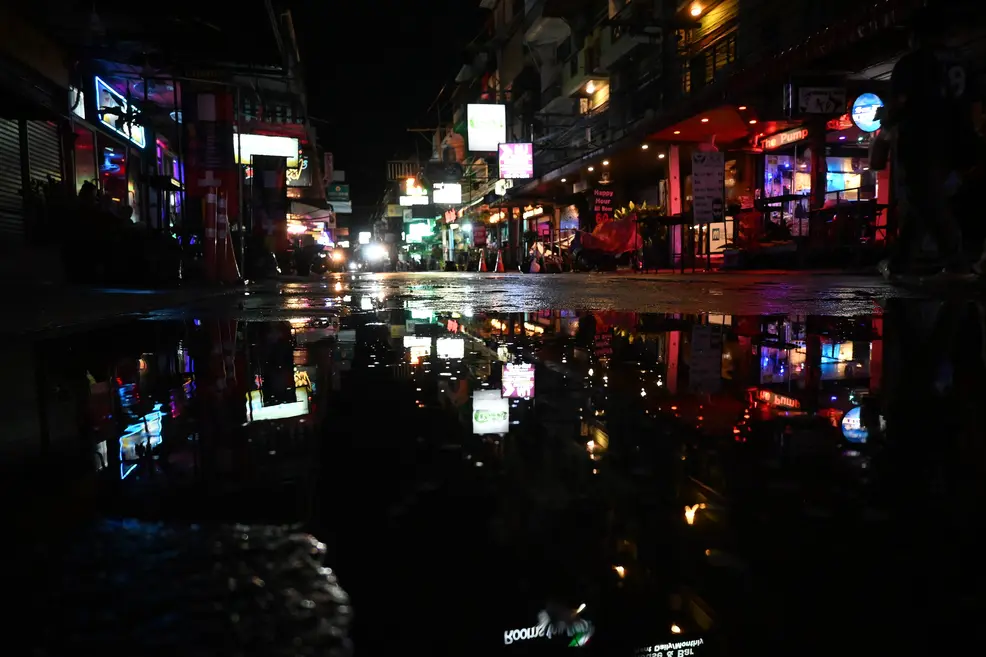

It's a bit ironic that the Cyberpunk season I saw such flat reactions to is set in a world that is about exactly this. In the world of Cyberpunk hardly anyone is watching film anymore. Why would you, when you can have a braindance? You don't watch a story, you live it, from inside someone else's head, with their senses and their feelings.
In that world it isn't a treat, it's an escape. The city is falling apart, the corporations own everything, and a braindance lets you step out of your own life for an hour. In the new season you see people lost in one right on the street, gone from the world around them while it keeps moving. Nobody needs to agree on what they saw, because nobody saw the same thing. The darkest part is that it works. People who are lonely and tired do not go looking for a conversation when something easier is right there.
Timothy Leary would have recognised it. Later in his life he saw the personal computer as a way for everyone to create their own reality, which he wrote about in Chaos and Cyber Culture. And in The Politics of Ecstasy he argued for changing your own consciousness, to be free of what society wants you to see. A braindance is the commercial version of that idea: your reality, still, but sold to you by someone else.

I don't think we are heading for neon and chrome. But the mechanism is already familiar: make it frictionless, make it personal, and wait until people stop asking each other what they thought.
Fear and hope
What I notice, mostly, is what has taken its place. When people talk, it's more and more about money, about staying healthy, or about how many children they have or want to have. Those things matter, of course. But food, music and cinema, things we enjoy just because they are good, seem to come up less.
I think a lot of it is pressure, and under the pressure, fear. Money, health and children are the things you can fall behind on. When everything feels expensive and uncertain, enjoying a film starts to feel like something you haven't earned yet. We used to live in a Vinex neighbourhood where the talk was mainly about the children, and about keeping up appearances. We don't have children. We did have a purple room, meant for one, and we wanted to name that child Hope. The room stayed empty while everyone around us talked about theirs. We moved to Den Bosch, and life got easier. Not because anything was wrong with those people, but I think the fear of falling behind leaves little room to talk about the things you actually like.
I started to see it this way after watching Snowpiercer. On that train, order is kept by rules, and the rules are kept by fear of severe punishment, which sometimes really happens. Most people stay in line, because the line is all they have. Another group has other plans, and those plans are based on hope: to escape, to do away with the classes, to be able to leave the train. Fear keeps you looking at your own place in the line. Hope makes you ask what is outside of it. I have the feeling that fear is getting more common and hope less so, and that you can hear it in what we talk about.
So I sometimes wonder: are we optimising to live long so we can work more, or are we optimising to enjoy life?
Hope also shows up in unexpected places. Nevermore has a song, Sentient 6, about a machine that wants to dream. I hear hope in that: it wants to dream, and to dream of a good future. It is a very different picture of the machine than the one that fills a screen for an audience of one. And I notice it in myself. I'm still getting used to living in Den Bosch, and slowly I'm starting to hope again, for other things than keeping up.
Slow down, and share something
I'm not against optimising. I'd like to live long, too. But I'd like those extra years to have more Saturdays like this one in them.
So here is my small suggestion for this weekend: slow down a bit, and share something. A film you loved, an album, a dish. Not just whether you liked it, but why it got to you. Then watch it, listen to it or eat it together, and find out what the other person makes of it.
I think that is also a small act of hope. Fear asks what you might lose. Hope asks what you could still enjoy, and who you could enjoy it with. Telling someone "you have to hear this" means believing that good things are still worth the time, and that the person in front of you is worth sharing them with.
The credits will roll anyway. It's nicer when someone is sitting next to you.